
Flow measurement
Plan repeatable ADCP transects for rivers, channels and low-flow sites.
Compare flow-measurement platformsFlow Series
Choose an autonomous surface vehicle (ASV), also known as an uncrewed surface vessel or USV, for your waterway, instrument and operating workflow.
Choose by mission
Field conditions and the data workflow are the most useful place to begin. Use these prompts to compare the range, then confirm the final vessel and instrument setup with Surfbee.
Plan repeatable ADCP transects for rivers, channels and low-flow sites.
Compare flow-measurement platformsMatch positioning, sensor integration and platform capacity to the survey.
Review survey configurationsPlan the vessel, sensor and deployment method for monitoring and profiling work.
Discuss a configured systemPlan a repeatable platform and sensor workflow for ongoing monitoring programs.
Compare monitoring optionsRange overview
Each model uses a transportable inflatable format. The main difference is the fieldwork and instrument workflow it supports.
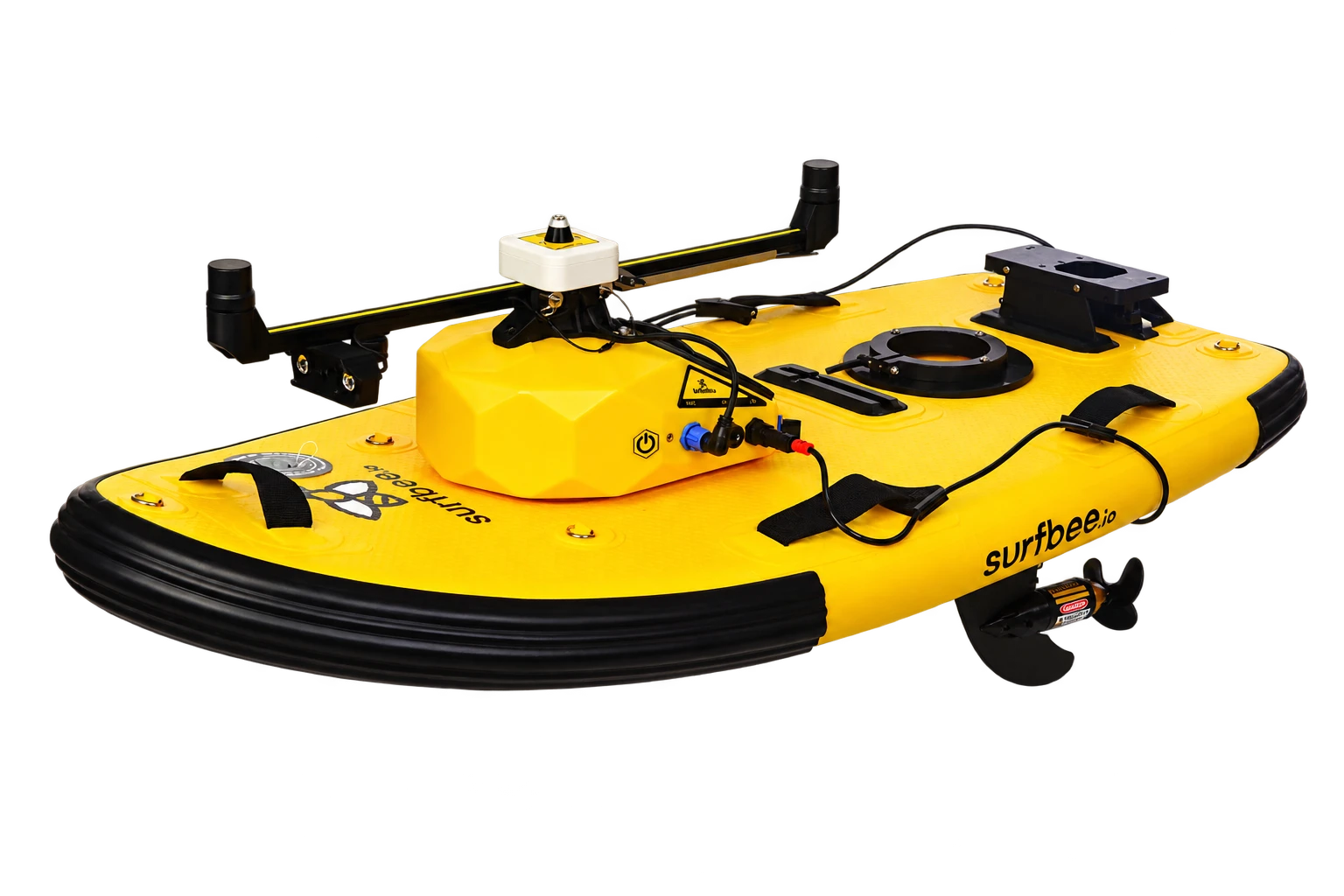
Versatile survey platform
A general-purpose platform for ADCP, bathymetry and environmental survey work.
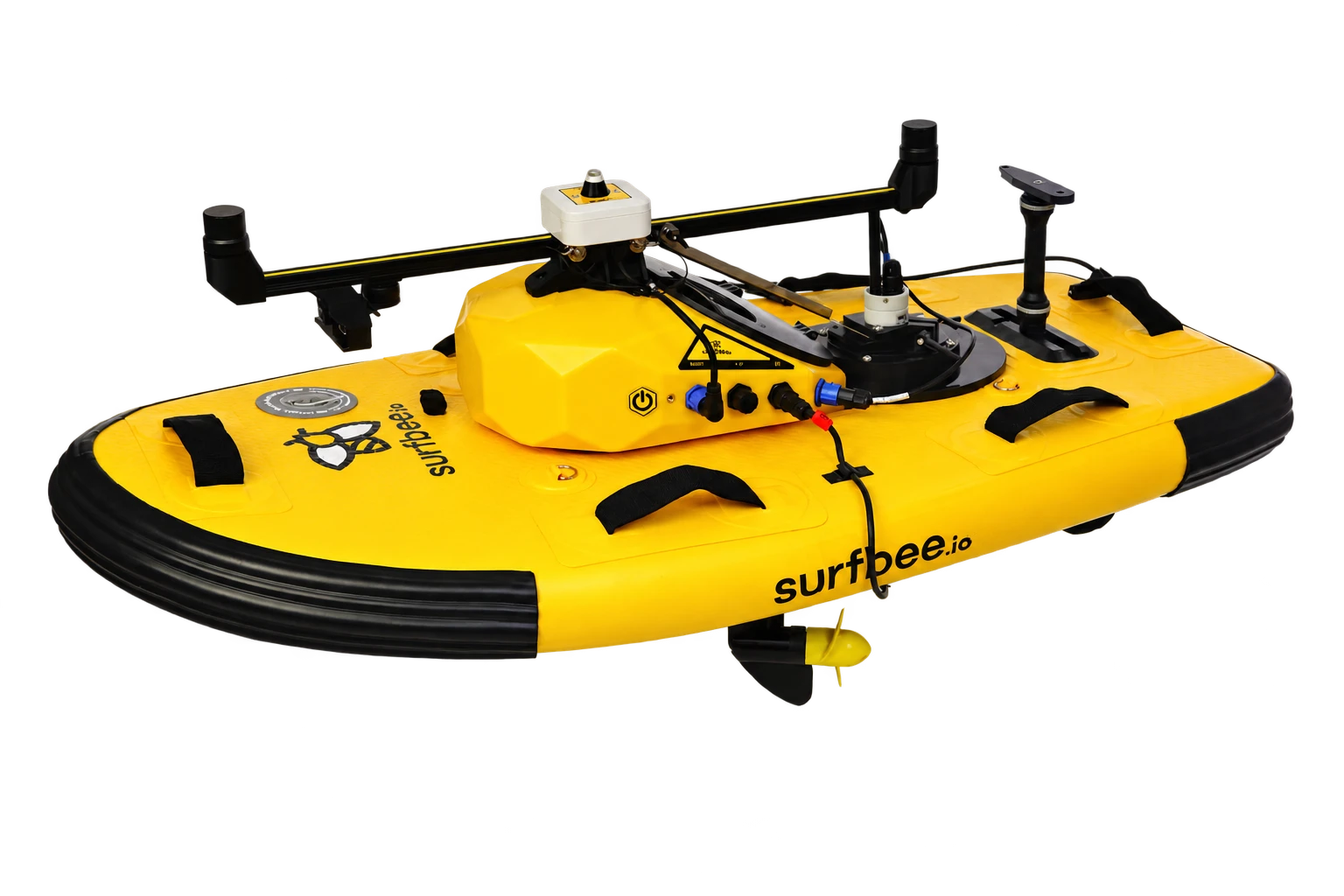
Compact low-flow platform
Compact and precise, with lateral movement designed for low-flow measurement work.
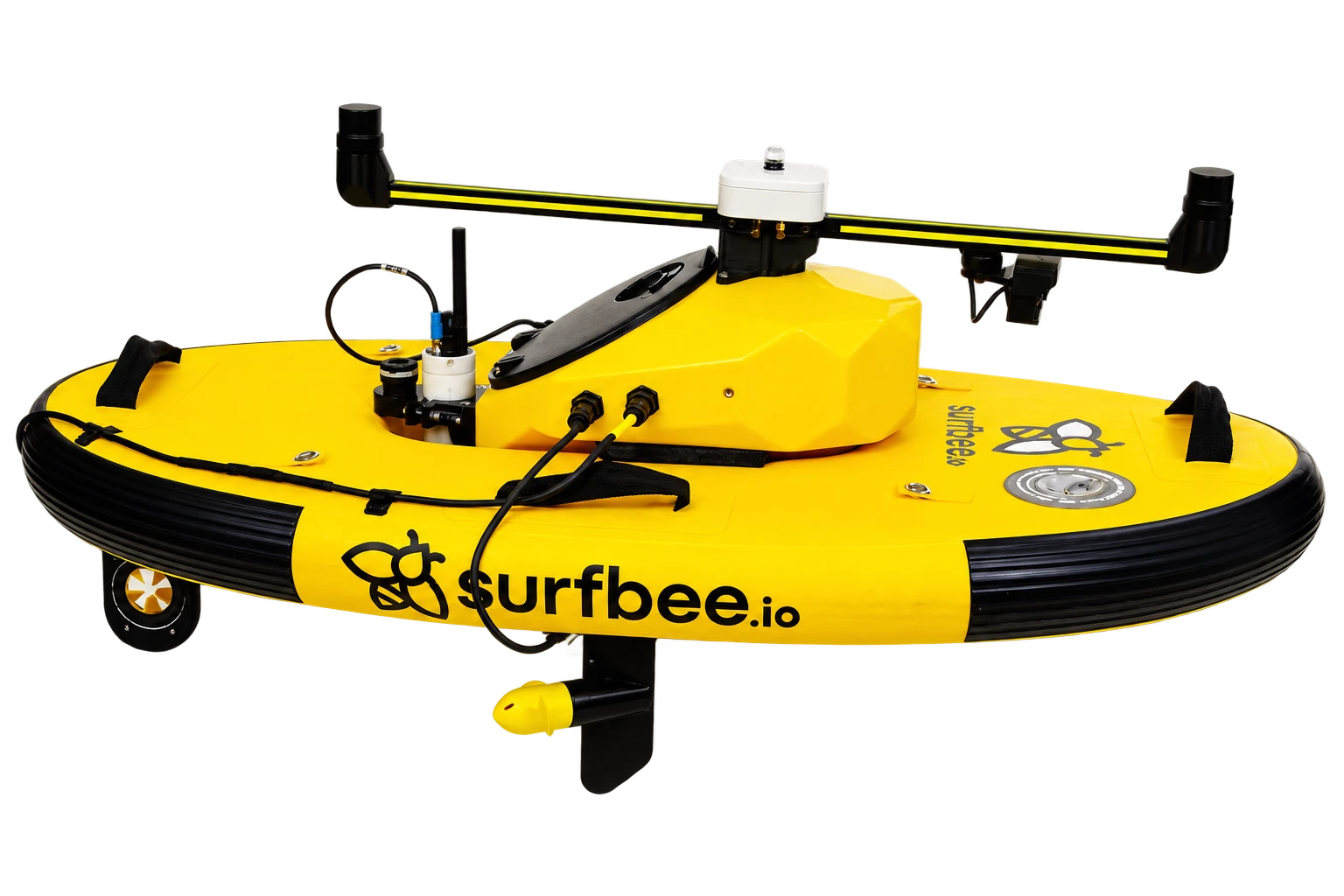
Ultra-compact platform
An ultra-compact platform, purpose-built for SonTek RS5 deployment.
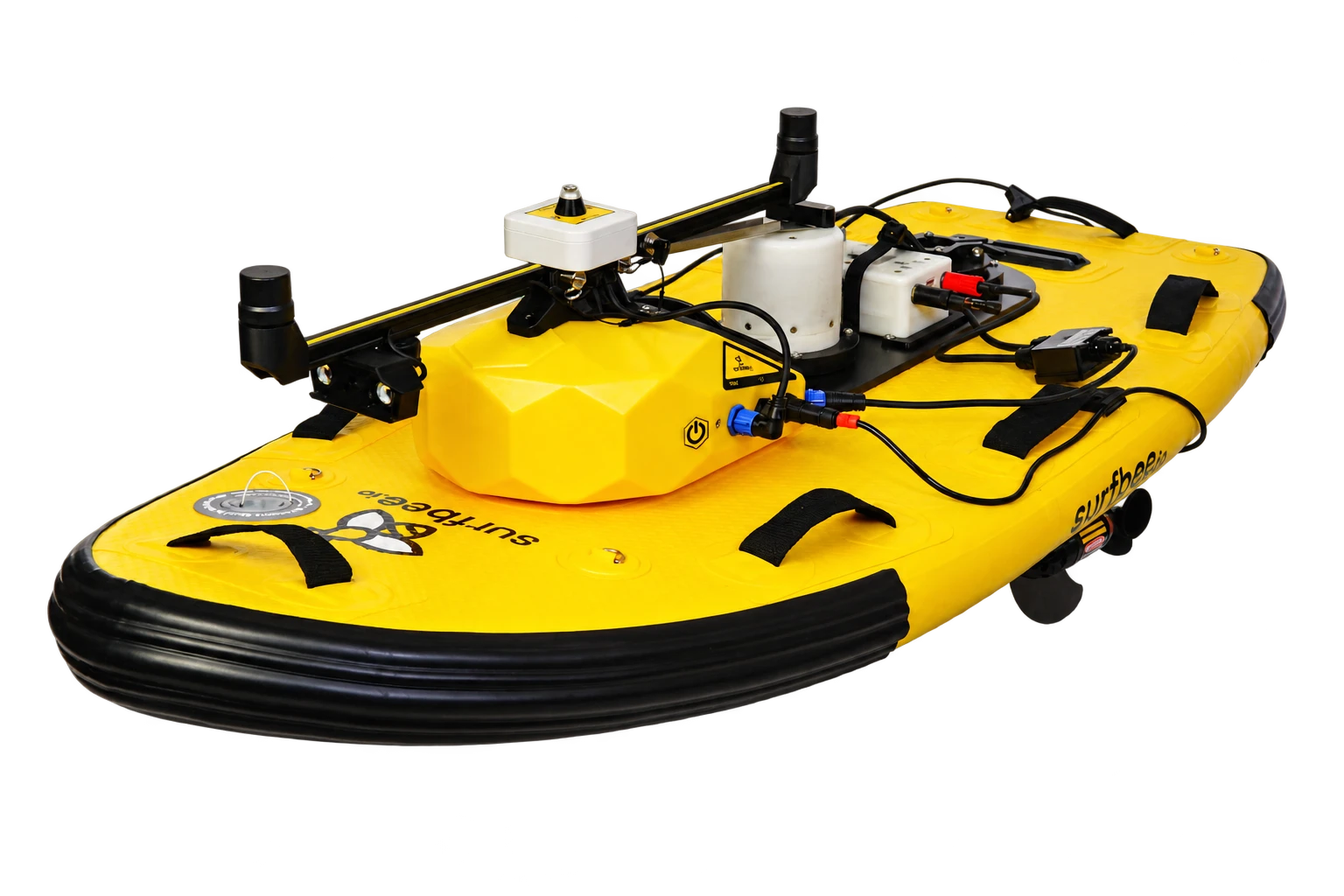
Multi-payload platform
A configurable platform for combined payloads, sensor integration and winch operations.
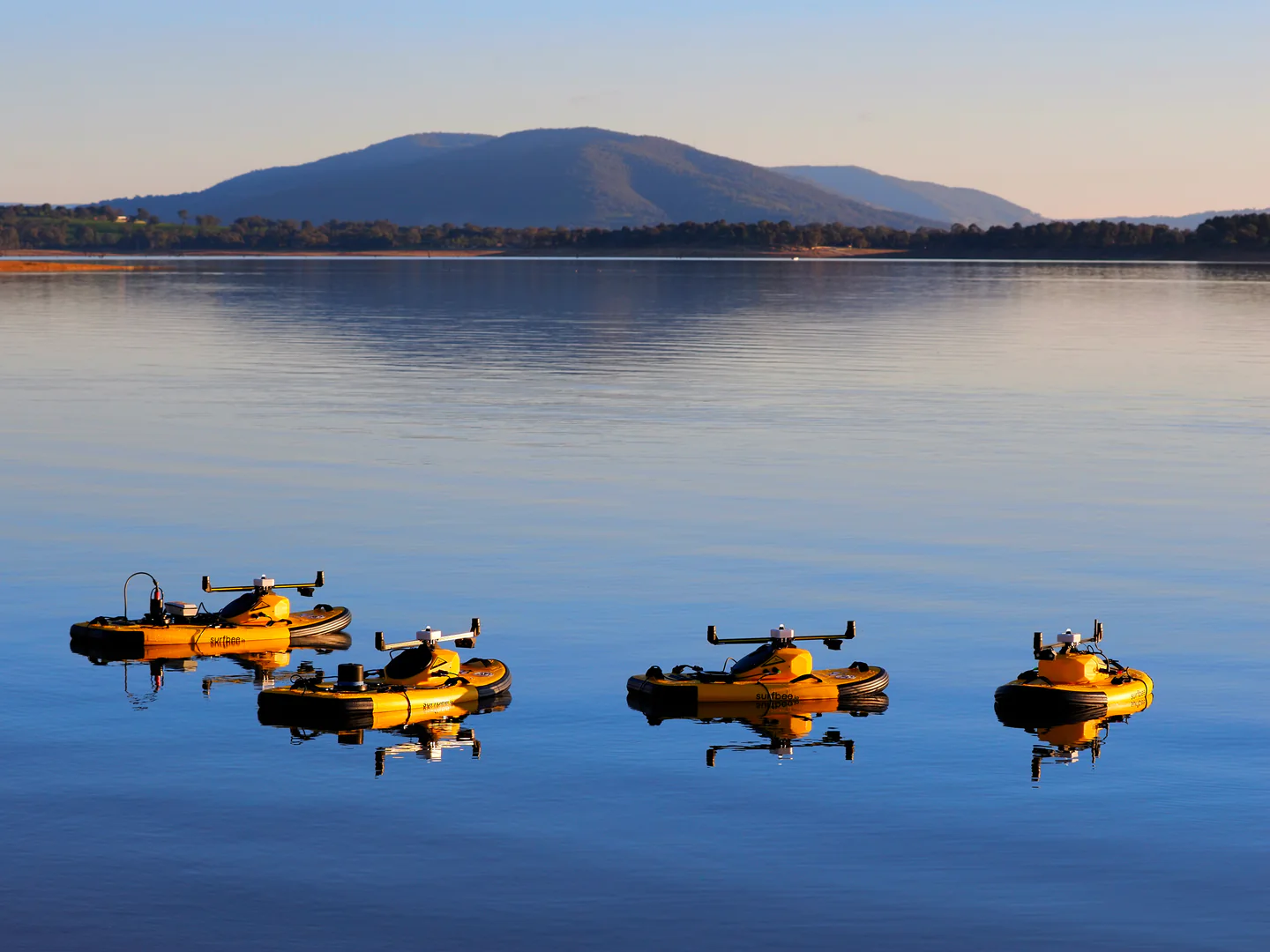
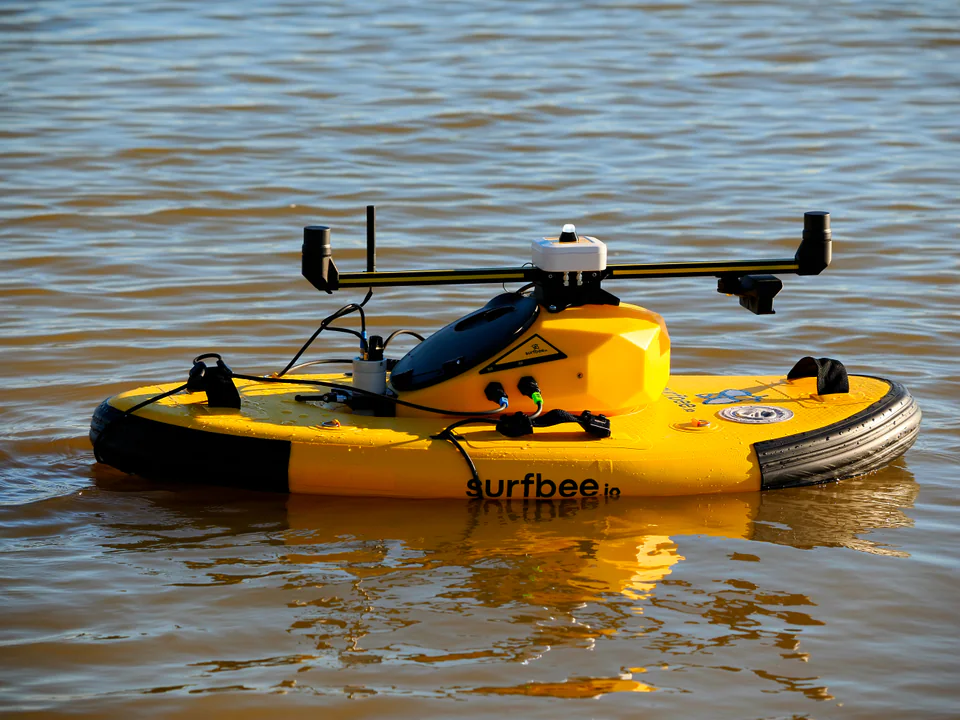
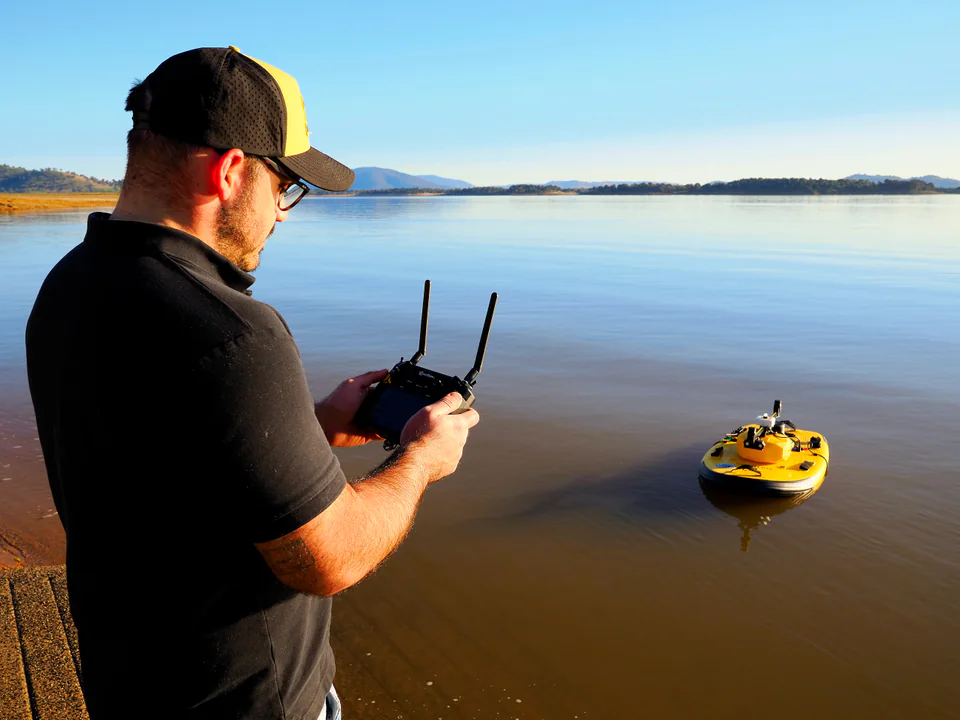
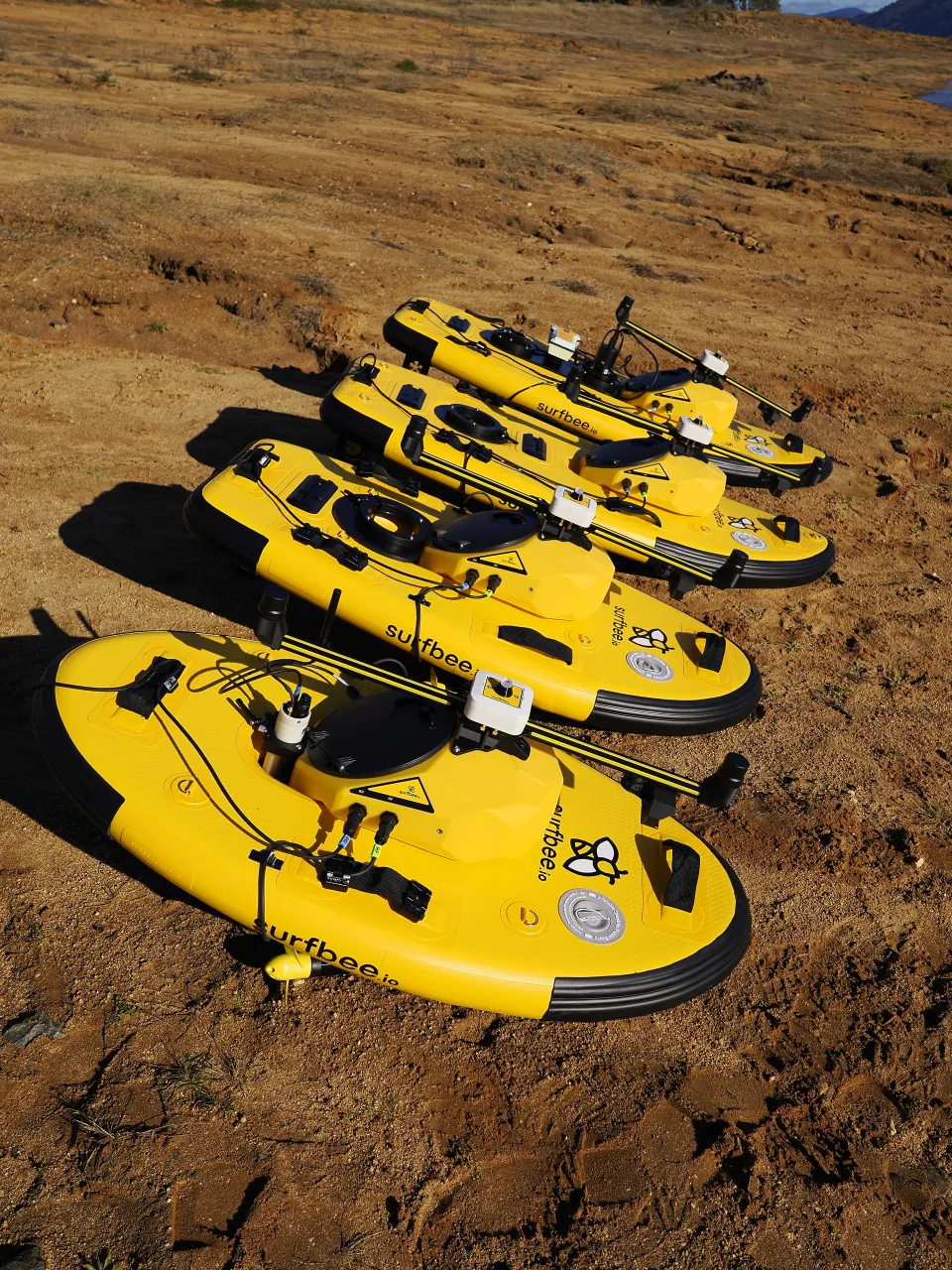
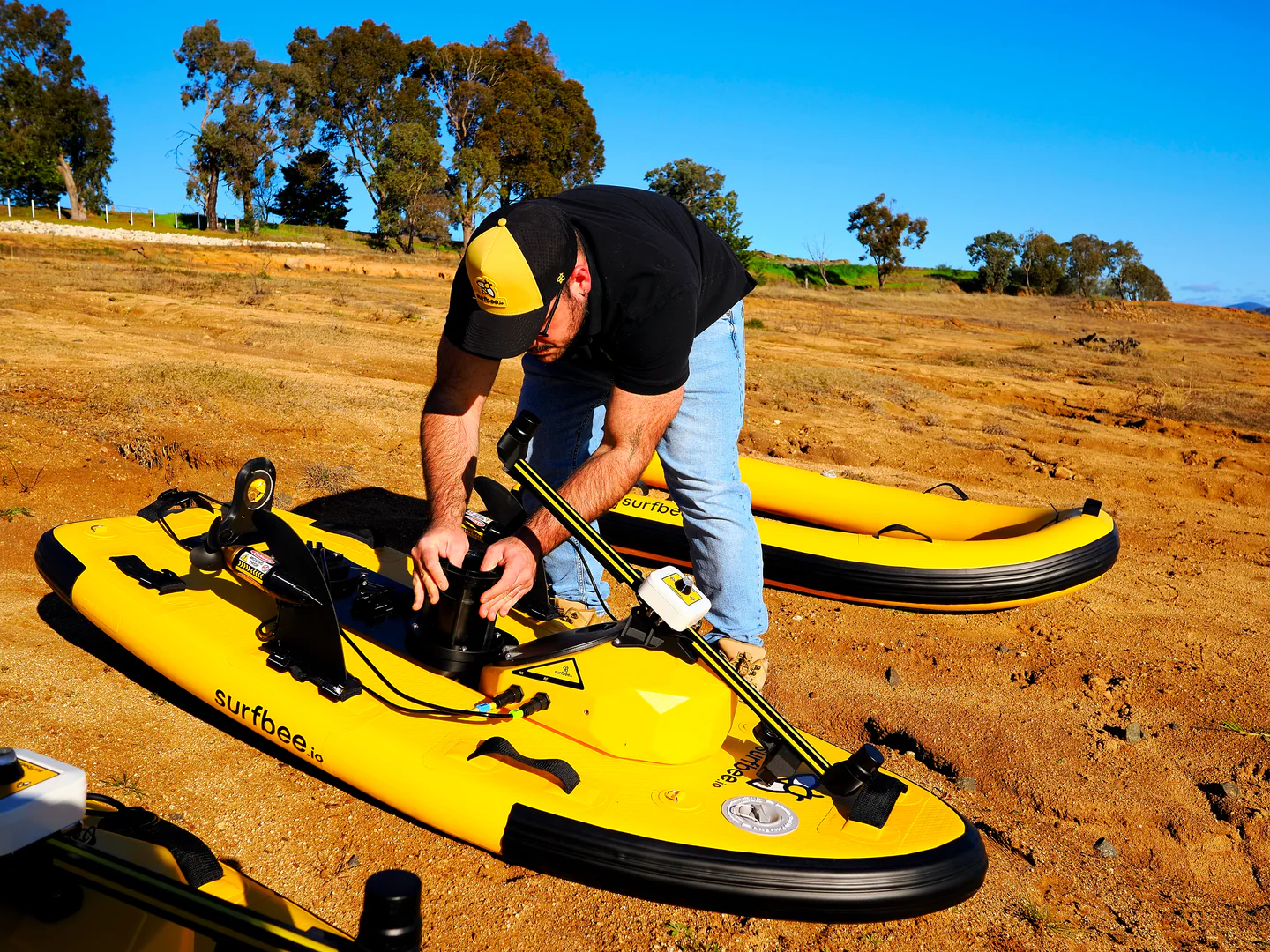
A closer view of the range, vessel configuration and shore-based operation at Lake Hume.
Lake Hume, Australia
Compare models
Compare hull dimensions, minimum operating depth, payload and sensor compatibility for every model.
| Decision point | Flow Seeker | Flow Scout | Flow Finder | Flow Duet |
|---|---|---|---|---|
| Best for | ADCP, bathymetry and environmental monitoring across varied field conditions. | Shallow, slow-moving channels where lateral positioning matters. | SonTek RS5 missions in shallow water and difficult-access sites. | Missions that require multiple payloads, profiling or specialised integrations. |
| Hull dimensions (L × W × H) | 1.65 × 0.75 × 0.1 m | 1.35 × 0.7 × 0.1 m | 1.20 × 0.7 × 0.1 m | 1.85 × 0.7 × 0.1 m |
| Transport bag (L × W × H) | 90 × 45 × 50 cm | 90 × 45 × 50 cm | 90 × 45 × 50 cm | 90 × 45 × 50 cm |
| Weight, no batteries | 13.5 kg | 11 kg | 11 kg | 15 kg |
| Minimum operating depth | 0.25 m | 0.14 m | 0.14 m | 0.25 m |
| Maximum payload | up to 10 kg | up to 8 kg | up to 8 kg | up to 12 kg |
| Top speed | 4 m/s (7.8 kn) | 2 m/s (3.9 kn) | 2 m/s (3.9 kn) | 4 m/s (7.8 kn) |
| Operating temperature | -10 °C to +45 °C | -10 °C to +45 °C | -10 °C to +45 °C | -10 °C to +45 °C |
| Hull | Inflatable PVC drop-stitch | Inflatable PVC drop-stitch | Inflatable PVC drop-stitch | Inflatable PVC drop-stitch |
| Thrusters | 2 × T600 plus T300 rear centre | 3 × T300 including rear centre | 3 × T300 including rear centre | 2 × T600 plus T300 rear centre |
| Positioning | Dual GNSS with heading, standard | Dual GNSS with heading, standard | Dual GNSS with heading, standard | Dual GNSS with heading, standard |
| Dedicated lateral movement | No | Yes | Yes | No |
| Sensor compatibility | SonTek M9, SonTek RS5, SonTek S5, SonTek PCM, Teledyne RiverPro, YSI EXO sonde, Airmar SS510 EchoRange+, Cerulean Sonar Sounder S500 | SonTek M9, SonTek RS5, YSI EXO, and more on request | SonTek RS5 | Dual payload. SonTek M9, SonTek RS5, SonTek S5, SonTek PCM, Teledyne RiverPro, YSI EXO sonde, Airmar SS510 EchoRange+, Cerulean Sonar Sounder S500. Documented combinations include M9 with PCM plus EXO, and RS5 plus EXO |
Figures describe the standard product. Speed, payload and operating depth vary with the instrument fitted and the conditions on the day.
Integration with Cerulean Sonar Omniscan 450 SS side scan and Cerulean Sonar Surveyor 240-16 MBES multibeam is planned. Model availability will be confirmed at release.
Jump to a model, then review each decision point in context.
Versatile survey platform
Figures describe the standard product. Speed, payload and operating depth vary with the instrument fitted and the conditions on the day.
Compact low-flow platform
Figures describe the standard product. Speed, payload and operating depth vary with the instrument fitted and the conditions on the day.
Ultra-compact platform
Figures describe the standard product. Speed, payload and operating depth vary with the instrument fitted and the conditions on the day.
Multi-payload platform
Figures describe the standard product. Speed, payload and operating depth vary with the instrument fitted and the conditions on the day.
Selection guide
Define depth, flow, access and launch conditions.
Name the exact instrument and data workflow.
Confirm what the platform needs to carry and connect.
Prioritise lateral control, versatility or multi-payload work.
Validate the complete configuration with Surfbee.
Beyond the platform
The vessel is one part of the system. Review the instrument, mounts, cables and positioning hardware together.
Hardware ecosystem
Review mounts, cables, positioning hardware and field components for your setup.
Documentation and support
Browse the current product guidance or contact Surfbee for the document that applies to your setup.
View resourcesProduct consultation
Share the site conditions, instrument, payload and data workflow so the team can review the most suitable platform and setup.
Talk to Surfbee